
Environmental Impact Assessment in Saudi Arabia: Complete NCEC Guide
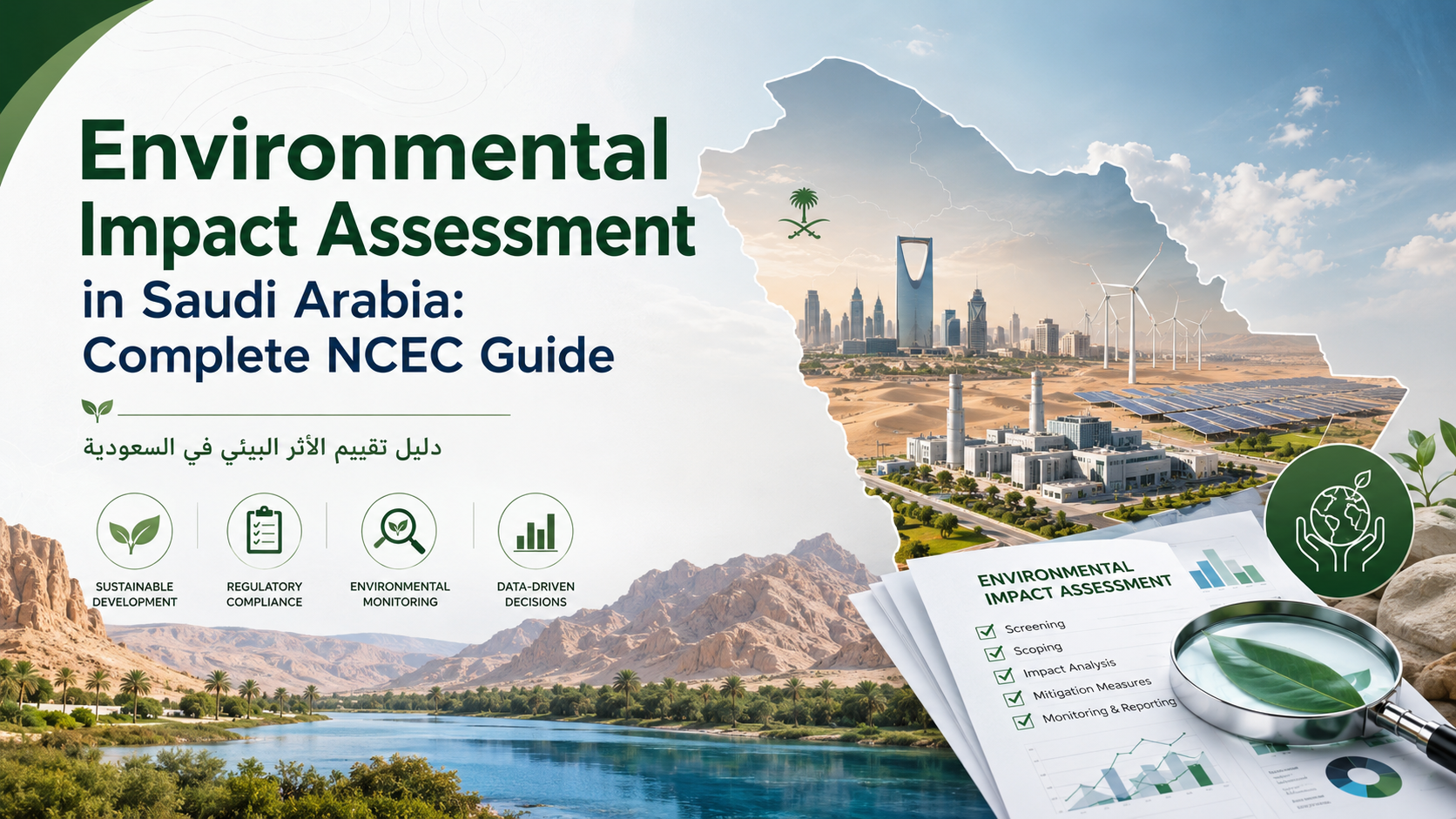
An environmental impact assessment evaluates how a proposed project may affect air, water, soil, drainage, communities, ecosystems, waste handling, and surrounding land use. A useful EIA is a practical risk-management tool, not only a report for approval.
What Is an Environmental Impact Assessment?
An environmental impact assessment evaluates how a proposed project may affect air, water, soil, drainage, communities, ecosystems, waste handling, and surrounding land use. A useful EIA is a practical risk-management tool, not only a report for approval.
When Is EIA Required in Saudi Arabia?
EIA is often required for industrial facilities, infrastructure, large developments, public projects, utilities, and activities with emissions, wastewater, waste, traffic, construction impacts, or sensitive nearby receptors.
NCEC Environmental Permit Requirements
NCEC environmental permit support usually includes project classification, baseline data, impact assessment, mitigation commitments, monitoring requirements, environmental management plans, and organized submission documentation.
Environmental Baseline Study
A baseline study records current site conditions before construction or operation, including air quality, noise, soil, groundwater, surface water, drainage, land use, and nearby sensitive receptors.
Air, Noise, Soil and Water Monitoring
Monitoring provides measurable data for EIA conclusions, construction controls, operational reporting, and future compliance. It also helps project teams identify risks before they become costly site issues.
EIA for Construction and Industrial Projects
EIA for construction and industrial projects in Saudi Arabia can include site screening, environmental baseline studies, air and noise monitoring, waste and wastewater review, hydrological and flood risk assessment, EMP, CEMP, compliance reporting, and NCEC Environmental Permit documentation.
Common Mistakes in EIA Applications
- Submitting incomplete project descriptions, drawings, or location data.
- Using weak baseline data that does not reflect actual site conditions.
- Missing air, noise, soil, water, drainage, waste, or sensitive receptor impacts.
- Preparing generic mitigation measures instead of project-specific EMP and CEMP commitments.
- Not organizing responses to technical comments clearly.
How EnmaTech Supports EIA Studies in Saudi Arabia
EnmaTech combines environmental assessment, hydrological studies, monitoring, GIS awareness, and engineering coordination to prepare practical EIA documentation for clients in Saudi Arabia.
FAQ
How long does an EIA study take?
The duration depends on project scope, monitoring requirements, site access, and available drawings.
Do all projects need a full EIA?
No. Some projects need screening, classification, permit support, or targeted studies.
Can EnmaTech support NCEC requirements?
Yes. EnmaTech supports baseline studies, monitoring, EIA reports, hydrology, and permit documentation.